Stateful vs. Stateless Applications: Which Is Better for Modern Cloud Architectures??...
HomepageArticlesStateful vs. Stateless Applications: Which Is ...
Stateful vs. Stateless Applications: Which Is Better for Modern Cloud Architectures???
Introduction
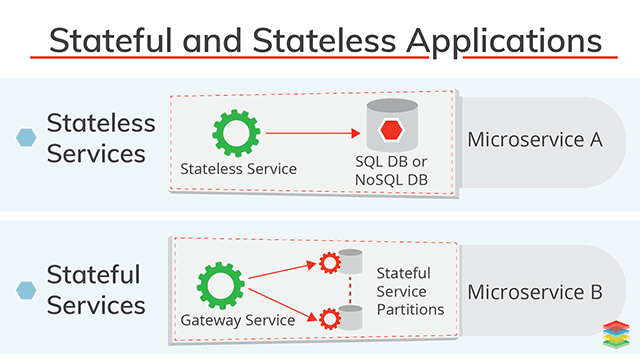
When designing a modern application—whether it's a website, API, or Microservices-based system—you will inevitably encounter two important concepts: Stateful Applications and Stateless Applications.
Understanding the difference between them is essential for building scalable, reliable, and cloud-friendly systems.
What Are Stateful Applications?
Stateful applications maintain information about a user's session or state between different requests.
In other words, the server remembers what happened during previous interactions.
Examples of Stateful Applications
Databases
Traditional session-based web applications
Online gaming systems
Real-time chat applications
What Are Stateless Applications?
Stateless applications do not retain any information about users between requests.
Each request is processed independently and must contain all the information required for execution.
Examples of Stateless Applications
Modern REST APIs
Most Microservices
Serverless applications and functions
Why Does the Cloud Prefer Stateless Applications?
Easier Scalability
New instances can be added without transferring session data.
Simplified Load Balancing
Any server can process any request.
Higher Availability
If one server fails, requests can be routed to another instance without losing session information.
Simpler Deployments
Updates, rollbacks, and maintenance become easier and faster.
When Do You Need Stateful Applications?
Despite the advantages of Stateless architectures, some workloads inherently require state management, including:
Databases
Storage systems
Live streaming platforms
Certain multiplayer gaming applications
These systems need to preserve data and context across operations.
How Can You Combine Both Approaches?
Modern cloud-native architectures often follow a hybrid approach:
Keep application services Stateless
Store session and state information in external systems such as Redis or databases
This approach provides the scalability benefits of Stateless applications while preserving the data required by the system.
Quick Comparison
Aspect
Stateful
Stateless
Scalability
More difficult
Easier
Session Management
Stored within the application
Stored externally
High Availability
Less flexible
More flexible
Load Distribution
More complex
Simpler
Cloud Compatibility
Moderate
Excellent
Popular Technologies
Stateful Technologies
PostgreSQL
MySQL
MongoDB
Stateless Technologies
REST APIs
Serverless Functions
Kubernetes Services
FAQ
Can a Stateful application be converted to Stateless?
Yes, in many cases. This is commonly achieved by moving session data and application state to external storage systems such as Redis, databases, or distributed caches.
Is Stateless always better?
Not necessarily. The best choice depends on the application's requirements. While Stateless architectures offer greater scalability and flexibility, some workloads naturally require stateful behavior.
Does Kubernetes favor Stateless applications?
Yes. Kubernetes is particularly well-suited for Stateless workloads because they are easier to deploy, scale, recover, and manage.
Conclusion
Understanding the difference between Stateful and Stateless applications is a fundamental part of designing modern software systems. While Stateless architectures have become the preferred approach for cloud-native environments due to their scalability and operational simplicity, Stateful applications remain essential for many critical workloads such as databases, storage platforms, and real-time systems. The most successful architectures often combine both approaches to achieve the best balance between scalability, reliability, and functionality.
 2019 - 2023 © WELNIZ.LTD. All rights reserved.

 United Arab Emirates (Arabic)
 Worldwide (English)