API Gateway: Why Do Modern Applications Depend on It???
HomepageArticlesAPI Gateway: Why Do Modern Applications Depend...
API Gateway: Why Do Modern Applications Depend on It???
Introduction
With the rise of Microservices architecture and APIs, modern applications need a centralized way to manage requests and communication between services. This is where the API Gateway becomes essential.
What is an API Gateway?
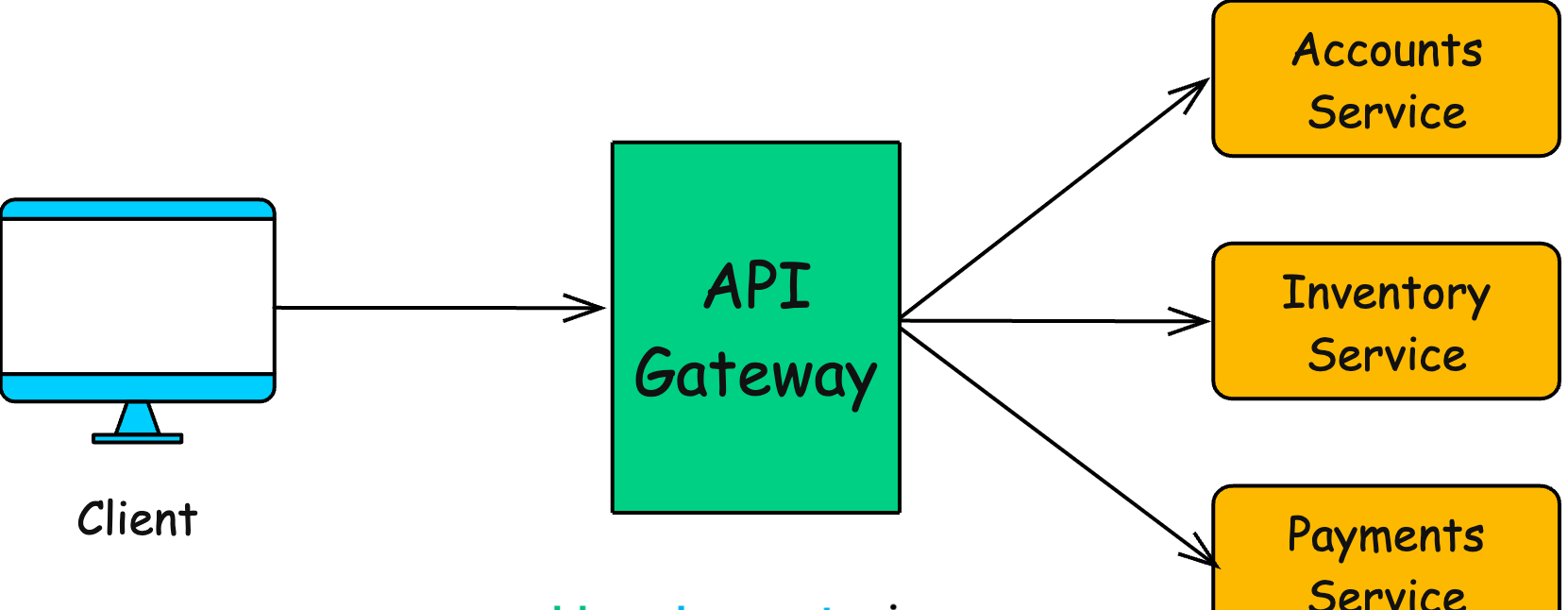
An API Gateway is a centralized entry point that receives user requests and routes them to the appropriate service inside the system.
How Does It Work?
Receives requests from users
Verifies authentication and security permissions
Routes requests to the correct service
Returns the response back to the user
Why is API Gateway Important?
Improved Security
Authentication and authorization can be managed in one central location.
Request Management
Makes it easier to route requests between services efficiently.
Reduced Complexity
Users interact with a single endpoint instead of multiple services.
Better Performance
Can use caching and traffic optimization to reduce system load.
Popular API Gateway Tools
Kong
NGINX
Amazon Web Services API Gateway
Google Cloud Apigee
Difference Between API Gateway and Load Balancer
Load Balancer
Distributes traffic across multiple servers to improve availability and performance.
API Gateway
Handles routing, security, authentication, monitoring, and request management.
When Do You Need an API Gateway?
Microservices-based applications
Cloud-native systems
Applications with multiple APIs
Challenges of API Gateway
Can become a single point of failure
Requires careful configuration
May increase infrastructure complexity
FAQ
Is API Gateway necessary for every application?
No, but it is highly beneficial for large and complex applications.
Does API Gateway improve security?
Yes. It adds a centralized protection layer for authentication and access control.
Conclusion
API Gateway is a core component of modern application architecture because it simplifies, secures, and manages communication between different services efficiently.
 2019 - 2023 © WELNIZ.LTD. All rights reserved.

 United Arab Emirates (Arabic)
 Worldwide (English)