Zero Trust Security: Why Is Trust No Longer Enough to Protect Systems???
HomepageArticlesZero Trust Security: Why Is Trust No Longer En...
Zero Trust Security: Why Is Trust No Longer Enough to Protect Systems???
Introduction
In the past, organizations relied on the idea that anyone inside the network could be trusted. However, with the rapid evolution of cyberattacks, this traditional approach is no longer effective. As a result, Zero Trust Security has become one of the most important modern cybersecurity models.
What Is Zero Trust Security?
Zero Trust is a security model based on the principle:
“Never Trust, Always Verify”
This means that no user or device is trusted automatically, even if it is already inside the network.
How Does Zero Trust Work?
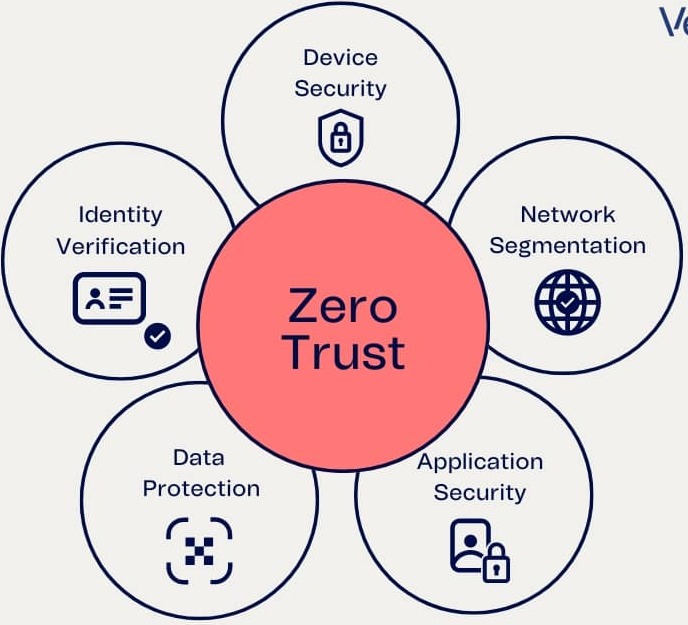
Zero Trust continuously verifies:
User identity
Device being used
Geographic location
Access permissions
before allowing access to any service or data.
Why Has Zero Trust Become Important?
Increased Remote Work
Employees now access systems from different locations and devices.
Advanced Cyber Threats
Cyberattacks have become more sophisticated and harder to detect.
Growth of Cloud Services
Data is no longer stored inside a single internal network.
Key Components of Zero Trust
Multi-Factor Authentication (MFA)
Adds an extra layer of security during login.
Least Privilege Access
Users are given only the minimum permissions they need.
Continuous Monitoring
Systems constantly analyze activity and detect suspicious behavior.
Benefits of Zero Trust Security
Reduces the risk of cyberattacks
Provides stronger data protection
Limits unauthorized movement within the network
Challenges
Requires careful configuration
Can be complex for large organizations
Needs continuous monitoring and management
FAQ
Does Zero Trust completely prevent cyberattacks?
No, but it significantly reduces security risks.
Is Zero Trust suitable for small businesses?
Yes, especially for companies using cloud-based services and remote work environments.
Conclusion
Zero Trust has become one of the most important modern cybersecurity approaches because it focuses on continuous verification instead of traditional trust-based security.
 2019 - 2023 © WELNIZ.LTD. All rights reserved.

 United Arab Emirates (Arabic)
 Worldwide (English)