Imagine a user completes a bank transfer, and at that exact moment the database server loses power. How can the database ensure that the transaction is not lost or that the stored data does not become corrupted?
Most modern database systems rely on a technique called Write-Ahead Logging (WAL). It is one of the most important mechanisms for ensuring data integrity, even in the event of unexpected power failures or server crashes.
Write-Ahead Logging (WAL) is a technique in which every modification is first recorded in a dedicated log file before being written to the actual database files.
If a failure occurs during the write process, the database can use this log to either complete or roll back the interrupted operations, ensuring that the database remains in a consistent state.
When an update operation is executed, the following steps occur:
WAL prevents the loss of transactions that have already been confirmed to users.
It enables databases to recover quickly after unexpected failures while maintaining data consistency.
Many database systems use WAL files to create incremental backups and enable Point-in-Time Recovery (PITR).
Instead of immediately updating multiple database files, the system can batch writes, reducing disk I/O and improving overall performance.
Write-Ahead Logging is widely used in many database management systems, including:
When a database restarts after an unexpected shutdown:
No. WAL is not a backup by itself. Instead, it is a recovery mechanism that works alongside backup strategies to minimize data loss and support database restoration.
Although WAL introduces an additional write operation, it generally improves overall performance by optimizing disk writes while significantly increasing reliability and durability.
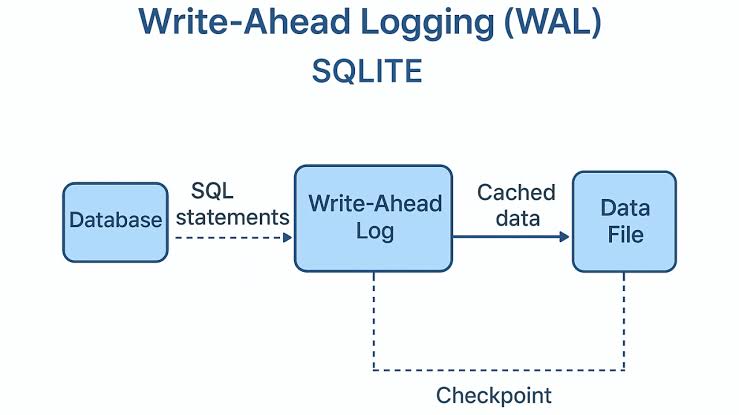
Write-Ahead Logging (WAL) is one of the core technologies that make modern databases resilient against crashes and power failures. By recording every change before modifying the actual database files, WAL ensures data durability, enables rapid crash recovery, and supports advanced backup and recovery features. This is why virtually every enterprise-grade database system relies on some form of Write-Ahead Logging.
 2019 - 2023 © WELNIZ.LTD. All rights reserved.

 United Arab Emirates (Arabic)
 Worldwide (English)