Modern websites and applications face daily cyberattacks and hacking attempts. That’s why companies rely on a Web Application Firewall (WAF) as a critical security layer to protect against common online threats.
A WAF is a security system that monitors and analyzes incoming requests to a website or application, then allows or blocks those requests based on predefined security rules.
A WAF analyzes:
Then it decides whether to:
Prevents attackers from exploiting databases through malicious queries.
Blocks harmful scripts from running inside the website.
Filters harmful or automated traffic.
Secures modern application APIs from abuse and attacks.
Runs through cloud services such as Cloudflare.
Dedicated physical devices installed in data centers.
Applications installed directly on servers.
No. Each one serves a different security purpose.
Yes, especially for websites that collect or process user data.
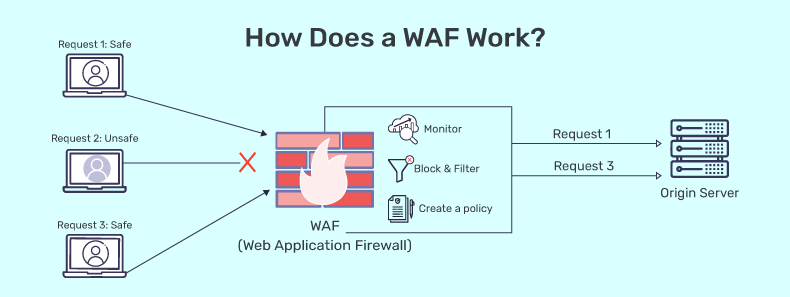
Web Application Firewall has become one of the most important tools for protecting modern websites and applications against cyberattacks and security vulnerabilities.
 2019 - 2023 © WELNIZ.LTD. All rights reserved.

 United Arab Emirates (Arabic)
 Worldwide (English)