Serverless Architecture: 7 Reasons Why It’s the Future of Hosting???
Introduction
With the rapid evolution of technology, new concepts have emerged to simplify application deployment and reduce complexity. One of the most important of these is Serverless Architecture.
Despite its name, it doesn’t mean there are no servers. Instead, it means developers no longer need to manage servers themselves.
In this article, we’ll explain what Serverless Architecture is, how it works, and why it’s becoming a powerful alternative to traditional hosting.
What is Serverless Architecture?
Serverless Architecture is a cloud computing model that allows you to run applications without managing infrastructure or servers.
Instead, the service provider takes care of:
- Servers
- Scaling
- Maintenance
- Security
So you can focus entirely on writing code.
How Does Serverless Work?
Serverless relies on a concept called Functions as a Service (FaaS).
How it works:
- A user sends a request
- A specific function is triggered
- The task is executed
- The function stops after completion
???? You only pay when your code runs—not all the time.
Popular Serverless Services
Some of the most widely used platforms include:
- AWS Lambda
- Google Cloud Functions
- Azure Functions
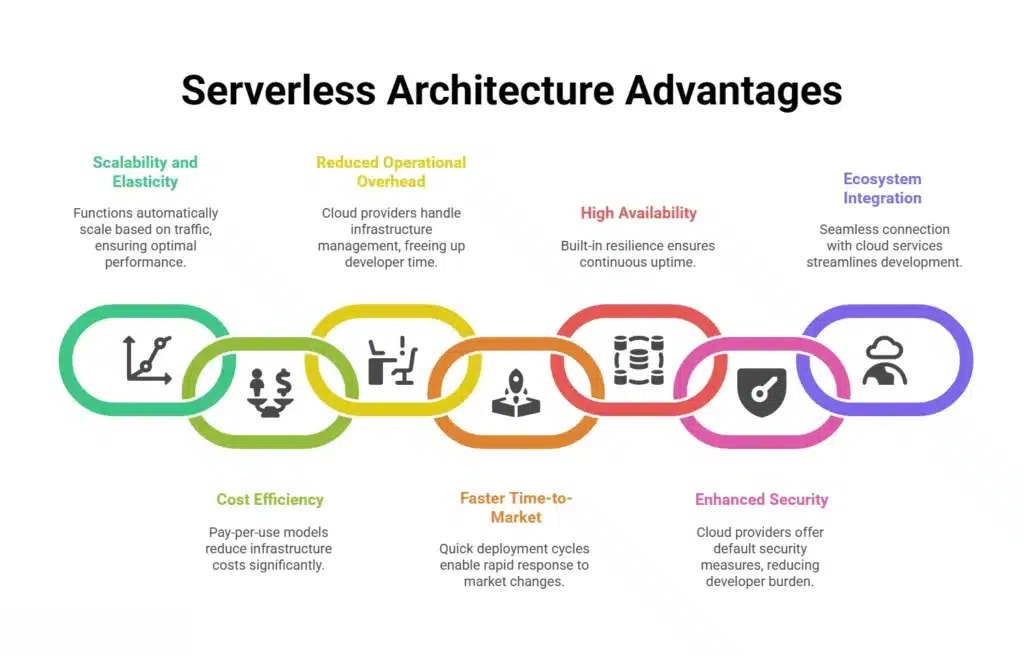
7 Reasons Why Serverless is the Future of Hosting
1. Cost Efficiency
You don’t pay for idle servers—only for actual usage.
2. Ease of Use
No need to manage or configure servers.
3. Automatic Scaling
Your application can handle thousands of users automatically.
4. Faster Development
Focus on coding instead of infrastructure.
5. High Performance
Runs on powerful cloud infrastructure.
6. Better Security
Security is handled by the cloud provider.
7. Ideal for Modern Applications
Perfect for mobile apps, APIs, and microservices.
Serverless vs VPS: Which is Better?
Serverless:
- No server management
- Pay-as-you-go pricing
- Best for small to medium projects
VPS:
- Full control
- Suitable for large-scale systems
- Requires technical expertise
???? The best choice depends on your project’s needs.
When Should You Use Serverless?
Serverless is ideal for:
- APIs
- Applications with unpredictable traffic
- Startups and MVPs
- Lightweight and fast applications
Drawbacks of Serverless Architecture
Despite its advantages, there are some downsides:
- Limited control
- Cold start latency
- Vendor lock-in
Real-World Use Cases
- Sending automated emails
- Image processing on upload
- Running APIs
- Chat applications
FAQ
Does Serverless mean no servers?
No, servers exist—but you don’t manage them.
Is Serverless suitable for large websites?
It can be, but some large projects prefer VPS or traditional cloud setups.
Is it always cheaper?
Not always, but it’s often more cost-effective for smaller applications.
Conclusion
Serverless Architecture represents a major shift in the hosting world. It offers flexibility, simplicity, and cost savings—making it an attractive option for modern development.
However, the right choice always depends on your project requirements and long-term goals.
 2019 - 2023 © WELNIZ.LTD. All rights reserved.

 United Arab Emirates (Arabic)
 Worldwide (English)