RPO and RTO: The Two Most Important Metrics in Disaster Recovery Planning???
HomepageArticlesRPO and RTO: The Two Most Important Metrics in...
RPO and RTO: The Two Most Important Metrics in Disaster Recovery Planning???
Introduction
When systems experience a major outage or a cyberattack, two critical questions arise:
How much data can we afford to lose?
How quickly can we restore operations?
The answers to these questions are defined by two key disaster recovery metrics: RPO and RTO.
What is RPO?
Recovery Point Objective (RPO)
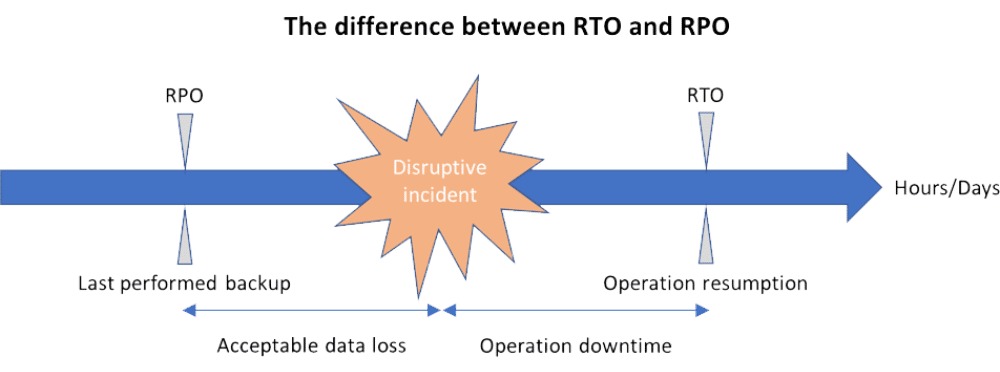
RPO represents the maximum acceptable amount of data loss measured in time.
Example:
If an organization has an RPO of 1 hour, it means the company can tolerate losing up to one hour of data in the event of a disaster.
What is RTO?
Recovery Time Objective (RTO)
RTO represents the target amount of time required to restore a service after an outage.
Example:
If an organization has an RTO of 30 minutes, the service must be restored within 30 minutes of the disruption.
RPO vs. RTO
Aspect
RPO
RTO
Focus
Data Loss
Downtime
Measurement
Time
Time
Goal
Minimize data loss
Restore services quickly
Why Are They Important?
Backup Strategy Planning
The lower the RPO, the more frequently backups or data synchronization must occur.
Infrastructure Design
The lower the RTO, the greater the need for standby systems and rapid recovery mechanisms.
Reducing Financial Impact
Fast recovery and minimal data loss help reduce business disruption and financial losses.
Real-World Examples
E-Commerce Store
RPO: 15 minutes
RTO: 30 minutes
Simple Corporate Website
RPO: 24 hours
RTO: 4 hours
Online Banking Platform
RPO: A few minutes
RTO: Less than 1 hour
How to Improve RPO
Frequent backups
Data replication
Distributed storage systems
How to Improve RTO
Automatic failover
Disaster Recovery (DR) sites
Recovery automation
FAQ
Can RPO be zero?
Yes, in theory. However, achieving near-zero data loss typically requires expensive technologies such as synchronous replication and highly available infrastructure.
Are RPO and RTO the same?
No. They measure different aspects of disaster recovery:
RPO focuses on how much data may be lost.
RTO focuses on how quickly services can be restored.
Conclusion
Understanding RPO and RTO is essential for building effective disaster recovery strategies. These metrics help organizations balance cost, availability, and risk while minimizing the impact of outages, cyberattacks, and other disasters on business operations and critical data.
 2019 - 2023 © WELNIZ.LTD. All rights reserved.

 United Arab Emirates (Arabic)
 Worldwide (English)