Rate Limiting: How Does It Protect Servers from Overload and Attacks???
HomepageArticlesRate Limiting: How Does It Protect Servers fro...
Rate Limiting: How Does It Protect Servers from Overload and Attacks???
Introduction
Many websites and applications suffer from heavy traffic or excessive requests that can affect performance or even cause service outages. This is where Rate Limiting becomes one of the most important modern protection techniques.
What is Rate Limiting?
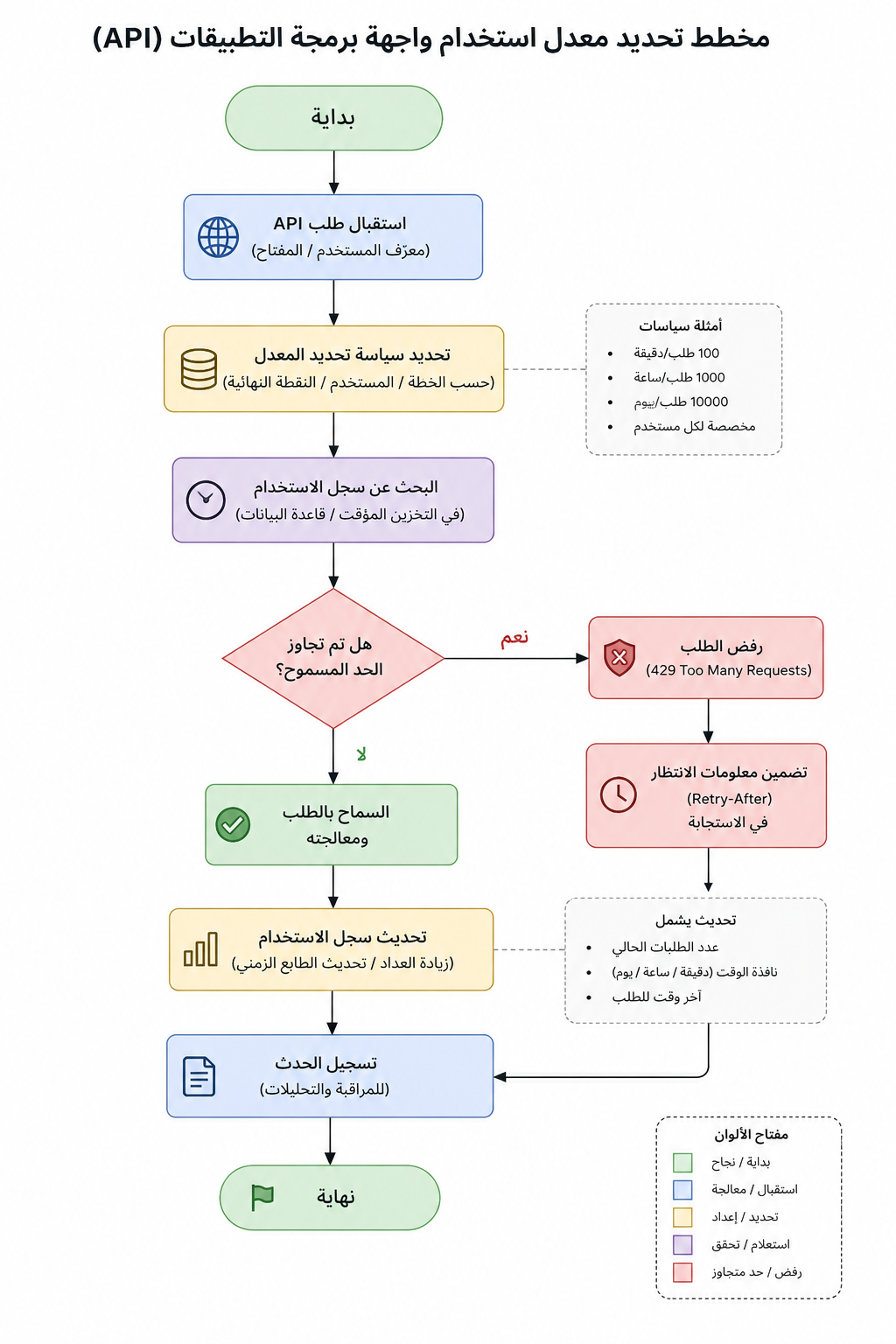
Rate Limiting is a method used to control the number of requests a user or system can send within a specific period of time.
How Does It Work?
The server defines:
The allowed number of requests
The time window
How to handle excessive requests
When the limit is exceeded, the server may:
Temporarily block the request
Delay the response
Return an error message
Why is Rate Limiting Important?
API Protection
It helps prevent abuse and malicious attacks targeting APIs.
Reducing Server Load
It keeps server performance stable by preventing overload.
Preventing Simple DDoS Attacks
It reduces the impact of excessive or automated requests.
Improving User Experience
It prevents a single user from consuming all system resources.
Common Types of Rate Limiting
Fixed Window
Limits the number of requests within a fixed time period.
Sliding Window
A more flexible and accurate approach for handling request limits.
Token Bucket
Allows requests based on the availability of tokens in a virtual bucket.
Where Is It Used?
APIs
Login systems
E-commerce websites
Cloud services
Challenges
It may affect legitimate users if configured incorrectly
Requires accurate tuning and monitoring
Some advanced attacks can bypass traditional limits
FAQ
Does Rate Limiting completely stop DDoS attacks?
No, but it helps reduce the impact of certain types of attacks.
Does it affect website speed?
Usually not, if it is configured properly.
Conclusion
Rate Limiting is considered one of the most important security techniques for modern applications because it helps regulate traffic, reduce server overload, and protect against simple attacks while maintaining system stability.
 2019 - 2023 © WELNIZ.LTD. All rights reserved.

 United Arab Emirates (Arabic)
 Worldwide (English)
 Conclusion