Noisy Neighbor Problem: Why Does a VPS Become Slow Even When Resources Seem Sufficien...
HomepageArticlesNoisy Neighbor Problem: Why Does a VPS Become ...
Noisy Neighbor Problem: Why Does a VPS Become Slow Even When Resources Seem Sufficient???
Introduction
A VPS may run smoothly for months and then suddenly start experiencing unexplained slowdowns, even though CPU and memory usage appear normal. In many cases, the root cause is the Noisy Neighbor Problem.
This issue is one of the most common challenges in virtualized and cloud environments where multiple users share the same physical infrastructure.
What Is the Noisy Neighbor Problem?
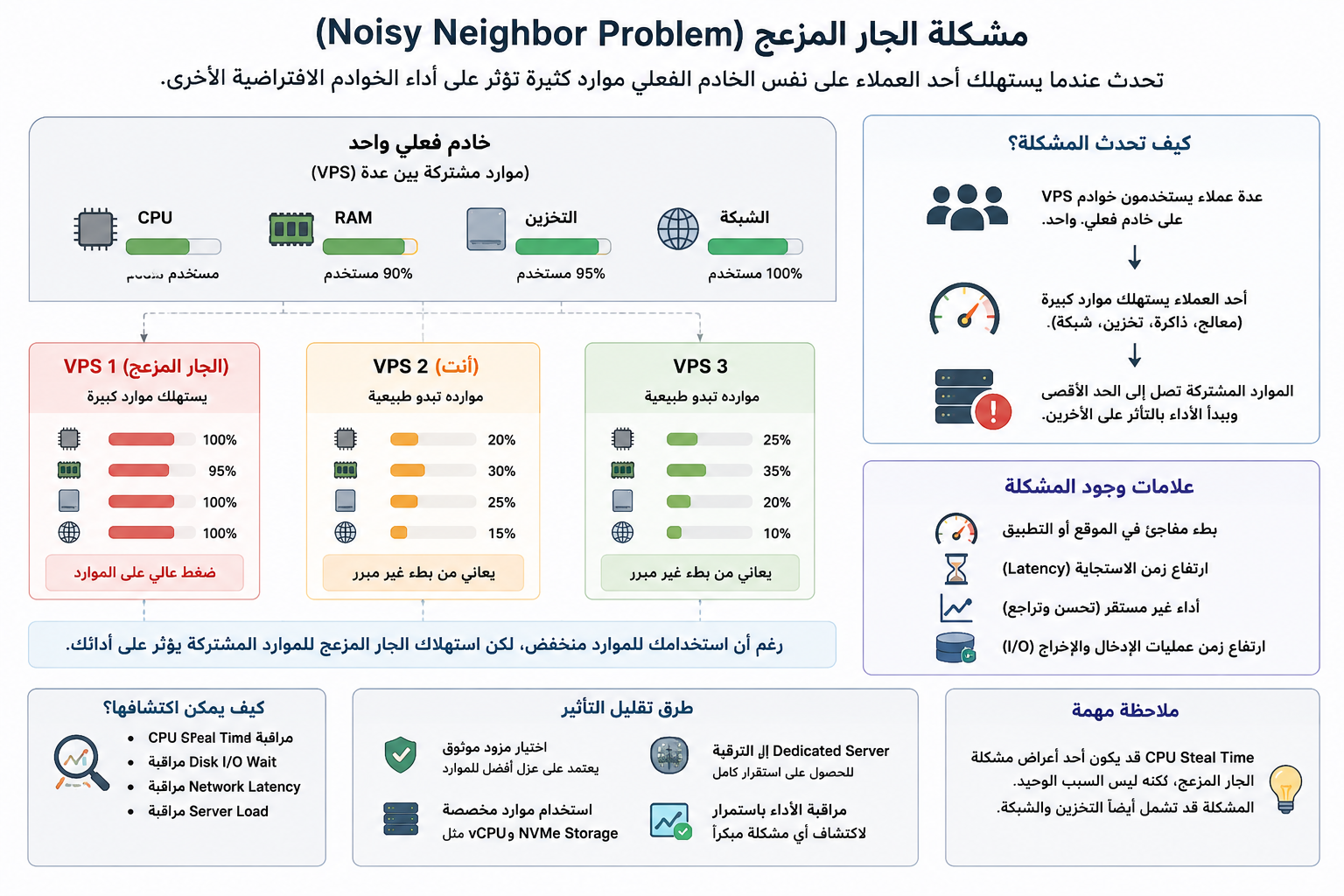
The Noisy Neighbor Problem occurs when another customer on the same physical server consumes an excessive amount of shared resources, such as:
CPU
Memory
Storage
Network bandwidth
As a result, the performance of other virtual machines hosted on the same server may be negatively affected.
How Does the Problem Occur?
In a VPS environment, multiple virtual servers run on a single physical host.
If one customer starts running:
CPU-intensive workloads
Large databases
High-bandwidth applications
Resource-heavy background processes
The shared infrastructure may become overloaded, affecting neighboring VPS instances.
Common Signs of a Noisy Neighbor Problem
Sudden Slowdowns
Performance degrades without any increase in website traffic or application load.
Higher Response Times
Latency increases, especially during certain periods of the day.
Inconsistent Performance
The server alternates between normal operation and periods of poor performance.
Increased Disk I/O Delays
Storage operations become noticeably slower.
How Can You Detect It?
Monitoring the following metrics can help identify the issue:
CPU Steal Time
Disk I/O Wait
Network Latency
Server Load
These indicators may reveal resource contention caused by other workloads on the same physical host.
How to Reduce the Impact
Choose a Reliable Hosting Provider
Providers with strong resource isolation mechanisms can minimize the risk.
Use Dedicated Resources
Select VPS plans that offer dedicated CPU cores, storage performance guarantees, or reserved resources.
Upgrade to a Dedicated Server
For mission-critical workloads, a dedicated server provides complete resource isolation.
Continuously Monitor Performance
Early detection makes it easier to identify and address resource contention issues.
Noisy Neighbor vs. CPU Steal Time
CPU Steal Time can be a symptom of a Noisy Neighbor Problem, but it is not the only indicator.
A noisy neighbor may also impact:
Storage performance
Network throughput
Memory availability
Therefore, investigating only CPU metrics may not reveal the full picture.
FAQ
Does the Noisy Neighbor Problem mean the hosting provider is bad?
Not necessarily. Resource contention can occur in any shared environment. The key difference is how effectively the provider isolates and manages resources.
Can it happen in public cloud environments?
Yes. Although cloud providers use advanced resource management techniques, Noisy Neighbor effects can still occur in some VPS and cloud-based services.
Conclusion
The Noisy Neighbor Problem is a common challenge in virtualized environments and may be the hidden reason behind poor VPS performance even when resource usage appears normal. Understanding its causes and monitoring the right metrics can help administrators diagnose performance issues and choose the most suitable infrastructure for their workloads.
 2019 - 2023 © WELNIZ.LTD. All rights reserved.

 United Arab Emirates (Arabic)
 Worldwide (English)
 Conclusion