Kubernetes has become the standard platform for running modern cloud-native applications. However, managing complex applications such as databases and messaging systems still requires significant operational expertise. This is where Kubernetes Operators come in, providing a new level of automation and intelligent application management.
A Kubernetes Operator is a software component that runs inside a Kubernetes cluster and automates complex operational tasks that would traditionally be performed manually by system administrators.
In other words, an Operator manages an application in the same way an experienced administrator would.
Many applications require ongoing operational tasks such as:
Performing these tasks manually can be time-consuming and error-prone.
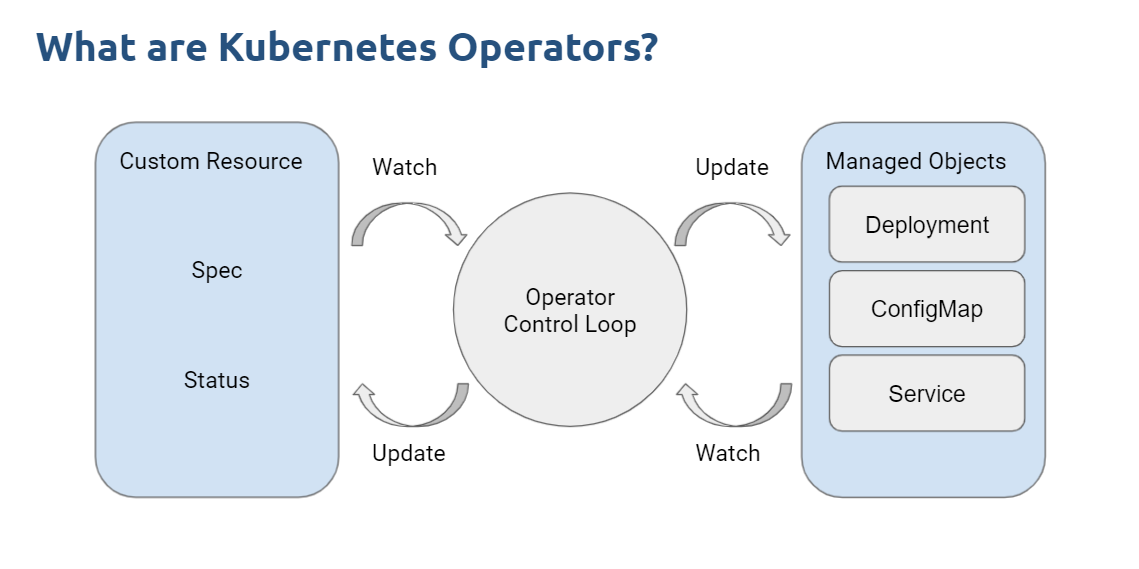
Operators are built around two key Kubernetes concepts:
A custom object added to Kubernetes that defines the desired state and configuration of an application.
A control loop that continuously monitors the application's actual state and automatically takes corrective actions whenever necessary.
Such as PostgreSQL and MongoDB.
Such as Kafka.
Including cloud storage platforms and automated backup systems.
Reduces the need for manual intervention and operational overhead.
Automatically detects failures and performs recovery actions.
Makes it easier to deploy and operate complex applications within Kubernetes.
No. Simple applications may not require them, but they provide significant value for complex and stateful workloads.
Yes, but typically only by a small amount compared to the operational benefits they provide.
Kubernetes Operators represent a major advancement in application automation. By embedding operational knowledge directly into software, they help engineering teams deploy, manage, and maintain complex systems more efficiently while improving reliability and reducing manual effort.
 2019 - 2023 © WELNIZ.LTD. All rights reserved.

 United Arab Emirates (Arabic)
 Worldwide (English)