Headless CMS: Why Modern Websites Are Moving Toward It???
Introduction
As website and application development continues to evolve, traditional content management systems are no longer sufficient for modern project needs. This is where Headless CMS emerges as a flexible and powerful solution for content management.
What is a Headless CMS?
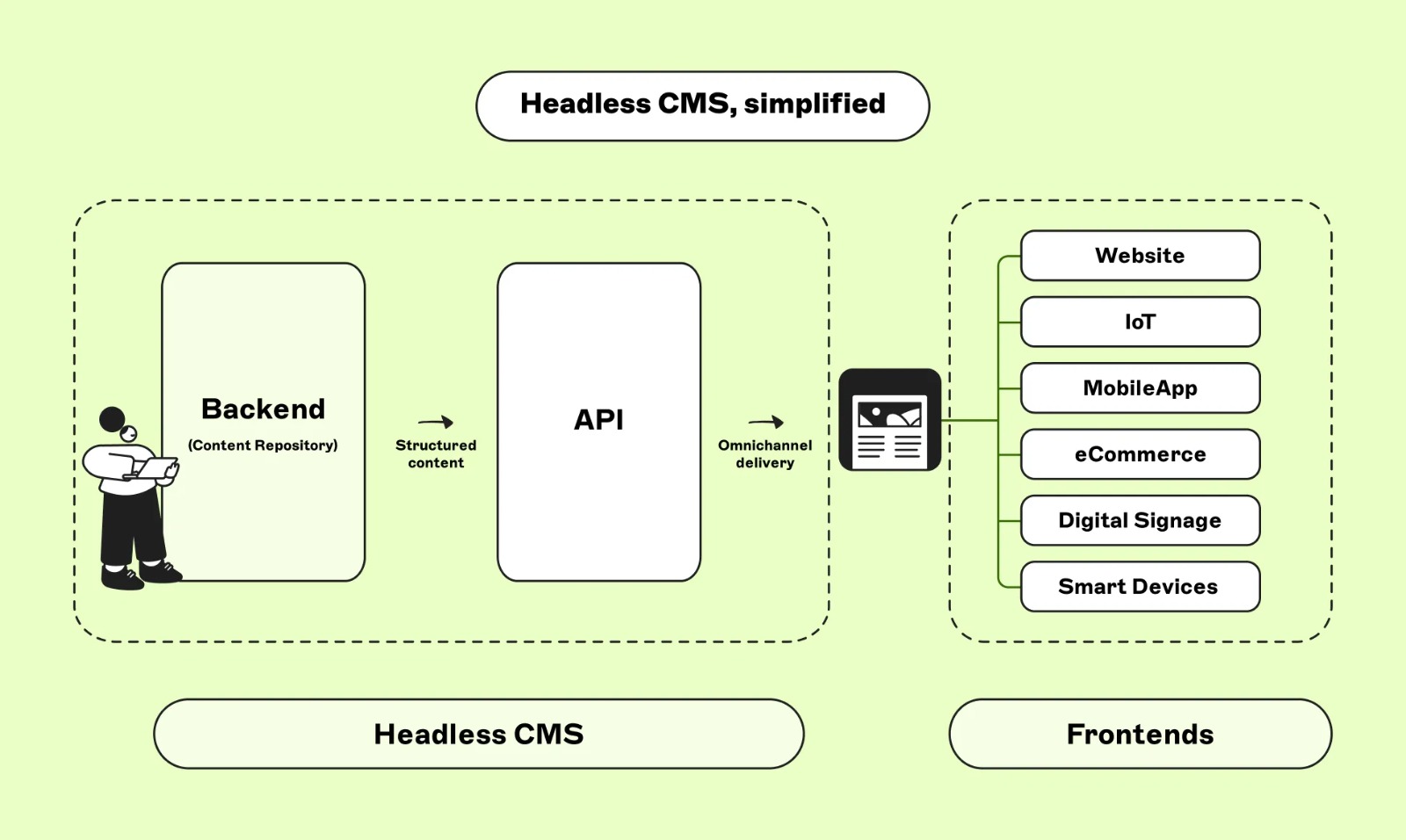
A Headless CMS is a content management system that separates:
- The frontend (presentation layer)
- The backend (content management system)
They are connected through APIs, allowing greater flexibility in how content is delivered.
How Does It Work?
- Content is created and managed داخل النظام
- It is stored without any predefined design
- It is delivered via APIs
- It can be displayed on any platform (website, mobile app, smart devices, etc.)
Headless CMS vs Traditional CMS
Traditional CMS:
- Tied to a specific design
- Limited customization
Headless CMS:
- Highly flexible
- Can be used with any frontend technology
Advantages of Headless CMS
- High flexibility in development
- Faster performance
- Supports multiple platforms (web, mobile, apps)
- Complete separation between content and design
When Should You Use It?
Headless CMS is ideal for:
- Mobile applications
- Modern, dynamic websites
- Large-scale or enterprise projects
Disadvantages of Headless CMS
- Requires technical expertise
- No ready-made frontend interface
FAQ
Is it a replacement for WordPress?
Not exactly—it’s a more advanced alternative, but not a direct replacement.
Conclusion
Headless CMS gives you full freedom to build and deliver content exactly the way you want. It’s especially suitable for modern projects that demand high flexibility, scalability, and performance.
 2019 - 2023 © WELNIZ.LTD. All rights reserved.

 United Arab Emirates (Arabic)
 Worldwide (English)