Disaster Recovery: How Do You Protect Your Project from Technical Disasters???
HomepageArticlesDisaster Recovery: How Do You Protect Your Pro...
Disaster Recovery: How Do You Protect Your Project from Technical Disasters???
Introduction
Server failures or data loss can cause major damage to any digital project. That’s why modern companies rely on Disaster Recovery (DR) to ensure service continuity and minimize downtime.
What is Disaster Recovery?
Disaster Recovery, or DR, is a set of plans and procedures used to restore systems and data after a major issue or technical disaster occurs.
Types of Technical Disasters
Server failures
Power outages
Ransomware attacks
Data loss
Natural disasters
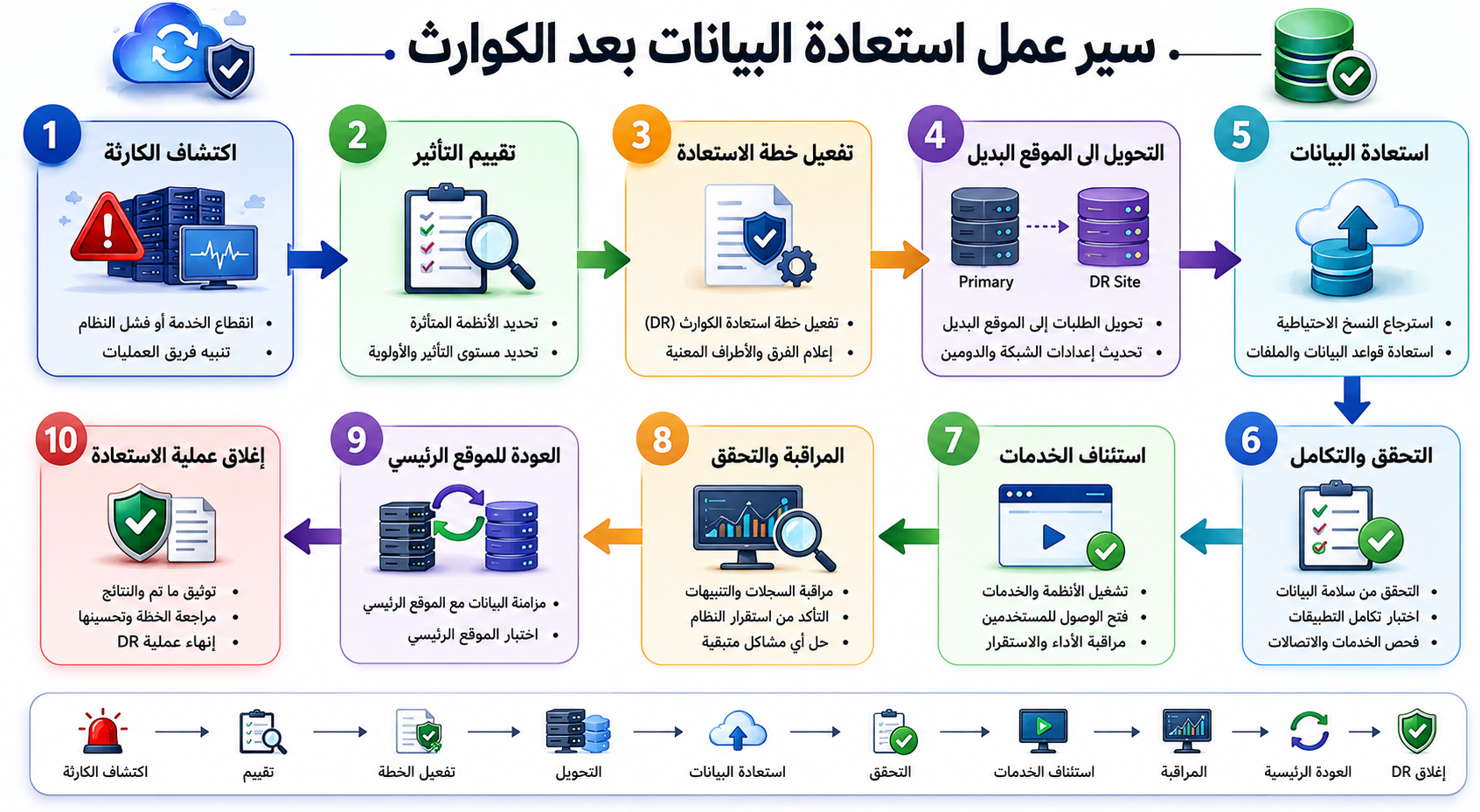
How Does a Disaster Recovery Plan Work?
A typical DR plan usually includes:
Creating backups
Replicating data to another location
Preparing backup servers
Quickly restoring services after a failure
Why Is Disaster Recovery Important?
Reducing Downtime
Services can be restored quickly after an outage.
Data Protection
It helps prevent the loss of important information.
Business Continuity
It minimizes financial and technical losses.
Key Components of Disaster Recovery
Backup
Creating regular copies of data.
Replication
Copying data to other servers or locations.
Failover
Automatically switching to a backup server when the main server fails.
Difference Between Backup and Disaster Recovery
Backup
A copy of the data only.
Disaster Recovery
A complete strategy for restoring the entire system and services.
Challenges
Sometimes expensive to implement
Requires continuous testing
Infrastructure management can be complex
FAQ
Is Disaster Recovery important for small projects?
Yes, even small projects need a plan to protect their data and services.
How often should the DR plan be tested?
It is recommended to test it regularly to ensure it works effectively.
Conclusion
Disaster Recovery is an essential part of protecting modern projects because it helps restore services and data quickly after technical disasters, ensuring stability and business continuity.
 2019 - 2023 © WELNIZ.LTD. All rights reserved.

 United Arab Emirates (Arabic)
 Worldwide (English)