Container Registry: Where Are Docker Images Stored???
HomepageArticlesContainer Registry: Where Are Docker Images St...
Container Registry: Where Are Docker Images Stored???
Introduction
With the growing adoption of Docker and Containers, managing application images has become essential in modern DevOps environments. This is where Container Registry plays a key role in storing and organizing container images.
What is a Container Registry?
A Container Registry is a system or service used to store and manage container images such as Docker Images.
Why Is It Important?
Docker images contain:
The application
Libraries and dependencies
Configuration files
Runtime environment
These components must be stored in a secure and organized location.
How Does It Work?
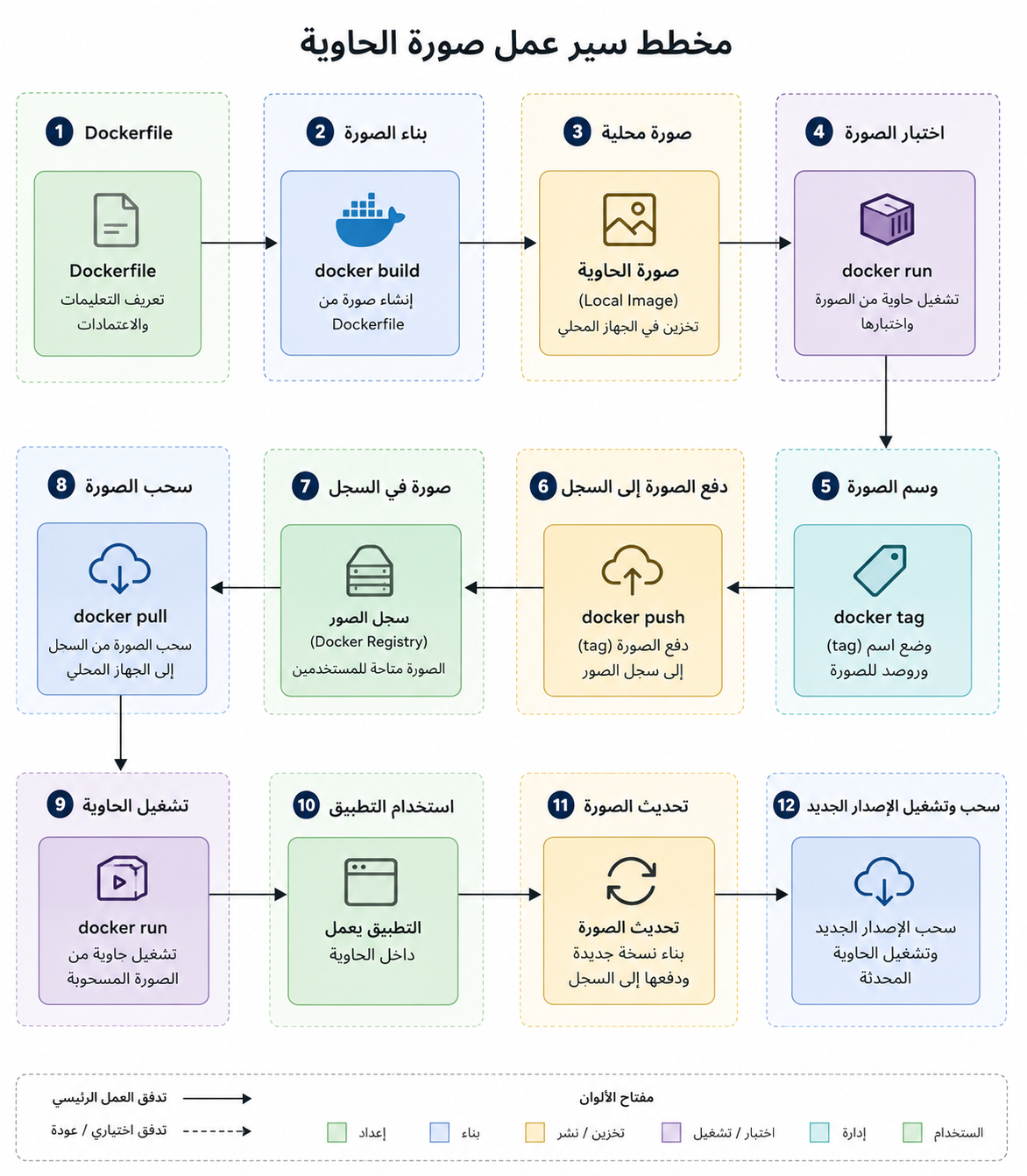
The developer creates a Docker Image
The image is pushed to a Registry
Servers or Kubernetes clusters can later pull and run the image
Popular Container Registry Services
Docker Hub
GitHub Container Registry
Amazon ECR
Google Artifact Registry
Benefits of a Container Registry
Easy Deployment
Images can be quickly downloaded and deployed on any server.
Version Management
Multiple versions of the application can be stored and managed.
Improved Security
Registries can scan images and detect vulnerabilities.
DevOps and CI/CD Support
They simplify automated deployment pipelines.
Difference Between Registry and Repository
Registry
The complete service responsible for managing container images.
Repository
A specific location inside the Registry that contains images for a particular project.
Challenges
Managing user permissions and access
Large storage consumption
The need for continuous image scanning and monitoring
FAQ
Is Docker Hub considered a Registry?
Yes, and it is one of the most popular container registry services.
Can companies create private registries?
Absolutely. Many companies use private registries for security and compliance reasons.
Conclusion
Container Registry is a core component of modern application management because it enables secure, organized, and efficient storage and deployment of container images.
 2019 - 2023 © WELNIZ.LTD. All rights reserved.

 United Arab Emirates (Arabic)
 Worldwide (English)